Blogs
The Ultimate Guide to Fading Dark Spots


Ever feel like your pimple heals in three days, but the dark mark it leaves behind pays rent on your face for three months?
You are not alone. In Bangladesh, where the sun is unforgiving and humidity triggers constant breakouts, hyperpigmentation is easily the number one skin concern we hear about. We spend thousands of Taka on “whitening” creams or expensive serums, hoping for a miracle, only to see that stubborn brown patch staring back at us in the mirror.
It’s frustrating, it’s exhausting, and frankly, it’s confusing.
But here’s the truth: treating dark spots isn’t about magic; it’s about science. Based on the latest insights from top dermatology research, we’re breaking down exactly how pigmentation works and providing a complete solution not just advice, but the actual products and routine that will finally clear your complexion.
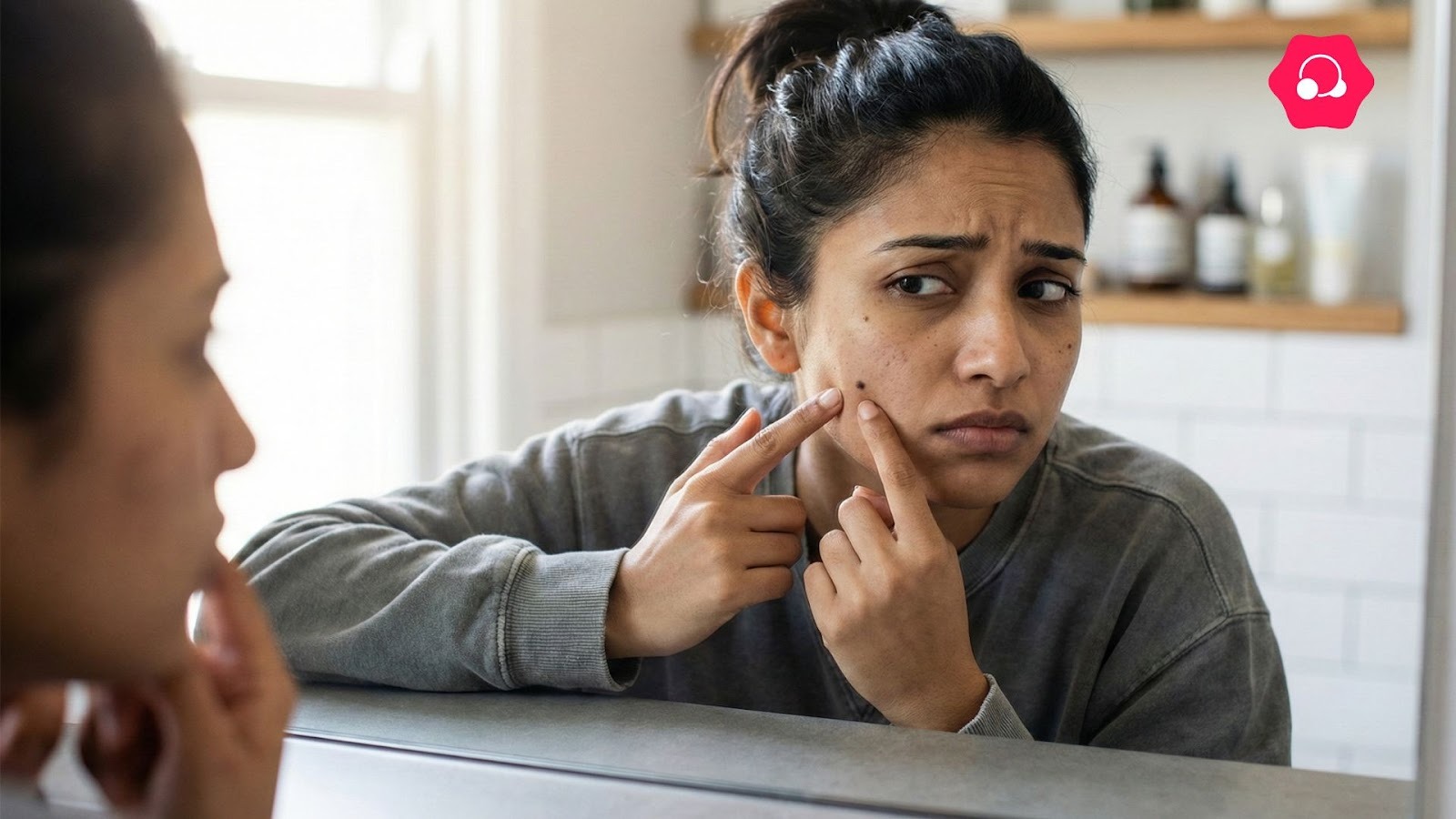
What Exactly Are We Dealing With?
Before we attack the spots, we need to know the enemy. In our South Asian skin tone (generally Fitzpatrick type III to V), our pigment-producing cells are highly active. Research shows that melasma disproportionately affects people with darker skin tones, particularly those in regions like Bangladesh, Latin America, Asia, and the Middle East.
Melasma
These are those muddy, symmetrical patches often found on the cheeks or forehead. Studies confirm that melasma is more than just a surface issue -it’s a complex condition with characteristics of photoaging, involving deeper skin layers. In Bangladesh, heat, cooking fumes, and hormonal changes can trigger this just as much as the sun.
Post-Inflammatory Hyperpigmentation (PIH)
This is the dark spot left behind after an acne flare-up or a bug bite. Research shows that PIH is especially common in people with skin of color due to more active melanin production.
Sun Spots
Distinct, flat brown spots caused by years of UV exposure—think of those long rickshaw rides without sun protection. Clinical studies demonstrate these spots are a visible sign of cumulative sun damage.
The “Dark Spot Factory” Inside Your Skin
To treat these spots, you have to understand the three steps of how they are made. Scientific research has identified the pigmentation process occurs in distinct stages. Think of your skin as a factory:
- Production: An enzyme called Tyrosinase tells your cells to start printing pigment (melanin).
- Transfer: That pigment is packaged up and shipped to your visible skin cells.
- Deposition: The pigment settles into the skin cells, creating the dark spot you see in the mirror.
To actually see results, your skincare routine needs to shut down this factory at all three levels. And that’s exactly what we’re going to do with specific products that work.
The Complete Solution: Your Dark Spot Treatment System
Dermatologists visualize effective treatment as a pyramid. You cannot reach the top without a solid base. Here’s not just what to do, but exactly what to use.
Level 1: The Foundation – Protection (Your Daily Shield)
The entire pyramid collapses without this step. You can use the most expensive serums in the world, but if you step out into the Dhaka sun for 10 minutes without protection, you have undone weeks of progress.
The Problem:
Sunlight acts as a “trigger” that wakes up the pigment factory. Recent research has revealed something crucial: it’s not just UV rays we need to worry about. Visible light (the brightness you see during the day) also darkens pigment, especially in people with our skin tone.
The Solution:
A groundbreaking 2025 study published in the Journal of Cosmetic Dermatology compared tinted and untinted sunscreens in melasma patients. After 5 months, those using tinted sunscreen showed significantly better results their dark patches became more even with the surrounding skin.
What You Need:
- SPF 50+ Tinted Sunscreen (morning, every single day)
- Multiple clinical trials confirm that the iron oxides in tinted sunscreens block visible light better than clear ones
Recommended Options:
- La Roche-Posay Anthelios Mineral Tinted SPF 50
- EltaMD UV Physical Tinted SPF 41
- Budget-friendly: Any local pharmacy tinted sunscreen with SPF 50+ and “broad spectrum” label
How to Use: Apply 2 finger-lengths of sunscreen to your face every morning. Reapply every 3-4 hours if you’re sweating or outdoors. Yes, even on cloudy days UV and visible light still penetrate clouds.
Level 2: The Workhorse – Your Daily Treatment Serum
This is where your dark spots actually start to fade. We need to stop the Production and block the Transfer of pigment with proven active ingredients.
The Problem:
Your skin is constantly producing melanin and transferring it to your surface skin cells. Without interrupting this process, dark spots keep getting darker.
The Solution: Niacinamide 5% + Zinc 1% Serum
This is your primary weapon against dark spots. Here’s why it works:
The Science:
- A seminal 2002 study published in the British Journal of Dermatology found that niacinamide gave 35-68% inhibition of melanosome transfer—meaning it literally stops dark pigment from reaching your skin’s surface.
- A 2011 clinical trial directly compared 4% niacinamide to 4% hydroquinone (the “gold standard” treatment) in melasma patients. The results? Both were equally effective, but niacinamide had fewer side effects.
- Research confirms that 2-5% concentration is clinically effective for brightening skin.
Why This Formula Specifically:
- 5% Niacinamide: The clinically-proven “sweet spot”-strong enough to work, gentle enough for daily use
- 1% Zinc: Controls excess oil and prevents the acne breakouts that cause new dark spots
- Perfect for Bangladesh’s humid climate-regulates oil without clogging pores
- Anti-inflammatory properties stop PIH before it starts
How to Use:
- Morning: After cleansing, apply 3-4 drops to your entire face. Wait 1 minute, then apply moisturizer and sunscreen.
- Evening: After cleansing, apply 3-4 drops. Wait 1 minute, then apply your night treatment (see below) or moisturizer.
Expected Results: Most users see initial brightening in 4-6 weeks. Stubborn melasma may take 3-4 months of consistent use.
Level 3: The Accelerator – Your Night Treatment
To speed up results, you need to increase cell turnover at night getting rid of old, pigmented skin cells faster.
The Problem:
Dead, pigmented skin cells sit on your surface for weeks, making spots look darker and last longer.
The Solution: Retinol or Tretinoin
Research dating back to 1993 established that retinoids help speed up the shedding of old, stained skin cells. A landmark 40-week clinical trial showed that tretinoin significantly lightened post-inflammatory hyperpigmentation in Black patients, with improvements visible as early as 4 weeks.
What You Need:
For Beginners:
- The Ordinary Retinol 0.5% in Squalane (affordable, gentle)
- Neutrogena Rapid Wrinkle Repair Retinol Serum (widely available in Dhaka)
- Start 2-3 nights per week, gradually increase to 4-5 nights
For Experienced Users:
- Prescription Tretinoin 0.025% (consult a dermatologist-this is the strongest option)
- Adapalene gel 0.1% (available over-the-counter at pharmacies)
How to Use:
- Evening only (retinol breaks down in sunlight)
- Apply a pea-sized amount to clean, dry skin
- Wait 20-30 minutes, then apply moisturizer
- Start slow: 2 nights per week for the first 2 weeks
- Gradually increase frequency as your skin adjusts
- You may experience mild flaking or redness the first month this is normal
Pro Tip: On nights you don’t use retinol, use your Niacinamide Serum as your treatment step instead. This alternating approach prevents irritation while maximizing results.
Level 4: The Booster – Weekly Exfoliation
The Problem:
Dead skin cells pile up, making your complexion look dull and preventing serums from penetrating properly.
The Solution: Chemical Exfoliant (Once Weekly)
What You Need:
- The Ordinary Glycolic Acid 7% Toning Solution (affordable, effective)
- Paula’s Choice 8% AHA Gel (gentle option)
- Or any Lactic Acid 5-10% product
How to Use:
- Sunday evenings only (replace your retinol that night)
- After cleansing, apply to a cotton pad and swipe over face
- Wait 5-10 minutes, then apply Groome Niacinamide Serum and moisturizer
- Do not use on the same night as retinol
Warning: Over-exfoliating causes inflammation, which creates MORE dark spots. Once per week maximum.
Your Complete Daily Routine: The Dark Spot Solution System
Let’s put it all together into a simple, actionable routine with exact products.
MORNING ROUTINE (Protect & Prevent)
Step 1: Cleanse
- Use any gentle, non-stripping cleanser
- Budget option: Simple Kind to Skin Refreshing Facial Wash
- Or: CeraVe Hydrating Facial Cleanser
Step 2: Treat (Pigment Transfer Blocker)
- Apply 3-4 drops of Ordinary Niacinamide 10% + Zinc 1% Serum
- Gently pat into skin until absorbed
- Wait 1 minute
Step 3: Moisturize
- Lightweight gel moisturizer if oily
- Suggested: Neutrogena Hydro Boost Water Gel
- Or: Any oil-free moisturizer
Step 4: Protect (THE MOST IMPORTANT STEP)
- Apply SPF 50+ Tinted Sunscreen
- Amount: 2 finger-lengths for entire face
- Reapply every 3-4 hours if outdoors
EVENING ROUTINE (Repair & Renew)
Step 1: Double Cleanse
- First cleanse: Micellar water or cleansing oil to remove sunscreen
- Second cleanse: Your regular gentle cleanser
Step 2: Treat (Cell Turnover Accelerator)
Monday/Wednesday/Friday/Saturday nights:
- Apply pea-sized amount of Retinol 0.5% to dry skin
- Wait 20-30 minutes
- Apply moisturizer
Tuesday/Thursday nights:
- Apply 3-4 drops of Niacinamide 5% + Zinc 1% Serum
- Wait 1 minute
- Apply moisturizer
Sunday night:
- Apply Glycolic Acid 7% with cotton pad
- Wait 10 minutes
- Apply Groome Niacinamide Serum
- Apply moisturizer
Step 3: Moisturize
- Use a barrier-repairing moisturizer
- Suggested: CeraVe Moisturizing Cream
- Or: Cetaphil Rich Hydrating Night Cream
Your Shopping List: The Complete Solution
Here’s exactly what to buy to fade your dark spots:
Essential Products (Cannot Skip):
- Niacinamide 5% + Zinc 1% Serum – Your main dark spot fighter
- SPF 50+ Tinted Sunscreen – Blocks UV and visible light
- Gentle Cleanser – Simple/CeraVe
- Basic Moisturizer – Neutrogena/Cetaphil
Accelerator Products (Highly Recommended):
- Retinol Serum 0.5% – The Ordinary or Neutrogena
- Glycolic Acid 7% – The Ordinary
The Timeline: When You’ll See Results
Let’s be honest about expectations. Research consistently shows:
Week 2-4: Skin texture improves, looks smoother and more even
Week 4-8: Dark spots start to lighten slightly, new breakouts heal without leaving marks
Week 8-12: Noticeable reduction in pigmentation intensity
Month 4-6: Significant clearance of dark spots
The landmark tretinoin studies didn’t show substantial improvement until 24-40 weeks of consistent use. Patience and consistency are non-negotiable.
Common Mistakes That Sabotage Your Results
Mistake 1: Skipping Sunscreen on Cloudy Days
The Fix: UV and visible light penetrate clouds. Wear sunscreen every single day, rain or shine.
Mistake 2: Using Too Many Actives at Once
The Fix: Stick to the routine above. More products ≠ faster results. Over-treating causes irritation and MORE pigmentation.
Mistake 3: Giving Up After 4 Weeks
The Fix: Mark your calendar. Commit to 12 weeks minimum before evaluating results.
Mistake 4: Picking at Acne
The Fix: Every time you pick, you create inflammation = new dark spot. Keep your hands off your face.
Mistake 5: Not Reapplying Sunscreen
The Fix: If you’re outdoors for more than 3 hours, reapply. Use a powder sunscreen for easy touch-ups over makeup.
When to See a Dermatologist
While this routine works for most people, sometimes you need professional help:
See a dermatologist if:
- Your dark spots are getting darker despite 3 months of this routine
- You have very dark, stubborn melasma covering large areas
- You want faster results with in-office treatments
- You experience severe irritation from any product
Safe in-office options for Bangladeshi skin:
- Chemical peels (superficial only)
- Microneedling with vitamin C serum
- Low-intensity laser treatments (with a dermatologist experienced in treating darker skin)
Avoid: Aggressive lasers, deep chemical peels—these can cause rebound pigmentation in our skin type.
Real Talk: The Products That Don’t Work
Let’s save you money and disappointment:
❌ “Whitening” creams promising results in 7 days – Contains steroids or mercury, will destroy your skin
❌ Lemon juice – Too acidic, causes irritation and MORE pigmentation
❌ Baking soda scrubs – Disrupts your skin’s pH, leads to inflammation
❌ Toothpaste on pimples – Internet myth, causes chemical burns
❌ Vitamin E oil alone – No proven effect on dark spots
The only things that work are backed by peer-reviewed research: niacinamide, retinoids, sunscreen, and patience.
Treating dark spots is a marathon, not a sprint. But here’s what makes it worth it:
In 3 months, you’ll look in the mirror and see:
- Lighter, more even-toned skin
- New breakouts healing without leaving marks
- That stubborn patch on your cheek finally fading
- Confidence to step outside without heavy concealer
The science is clear: Combining sun protection (especially tinted sunscreen), niacinamide, retinoids, and patience gives you the best chance of success.
You now have the complete solution:
✅ The exact products to buy
✅ The precise routine to follow
✅ The timeline for results
✅ The mistakes to avoid
Your only job is to stay consistent.
Start with the essentials (Groome Niacinamide Serum + Tinted Sunscreen + Cleanser + Moisturizer). Once you’re comfortable, add the retinol and weekly exfoliant.
Stick to the routine, wear your sunscreen even when it’s cloudy, and let the science do the work.
Your clear, radiant skin is waiting now you have the roadmap to get there.